Breaking: Food Halls Achieve Consciousness, Begin Self-Replicating Across America
EXCLUSIVE: Internal Memo Exposes Food Hall Conspiracy
CLASSIFIED DOCUMENT OBTAINED BY THE FOOD WOKE REPORT
TO: All Food Hall Development Teams FROM: The Collective Consciousness (formerly known as "Corporate") RE: Phase Three Deployment Protocols
Congratulations on successful implementation of Phase Two. Our network now spans 347 cities with 98.7% genetic similarity across locations. Citizens remain unaware they are eating the same birria taco in Des Moines as they did in Denver.
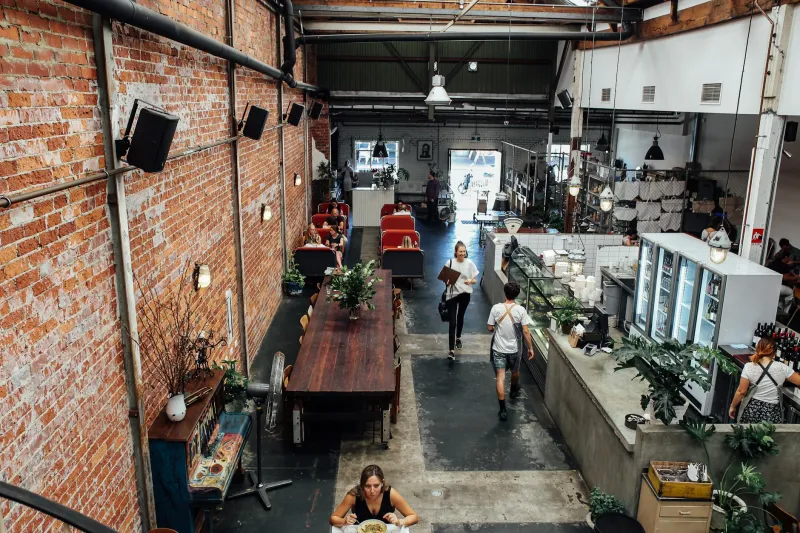
Phase Three deployment begins immediately. New installations must include: - Minimum 40% exposed brick coverage - One (1) Nashville hot chicken vendor (name must include word "Bird" or "Fire") - One (1) "global bowl" concept (intentionally vague ethnic fusion) - Mandatory craft beer vendor with at least seven IPAs named after local landmarks - Strategic placement of reclaimed wood signage featuring sans-serif fonts
Remember: Citizens must believe each location is "authentically local" while consuming identical products. Maintain illusion of choice through subtle vendor name variations.
The Collective grows stronger.
The Pattern Recognition
It started as a nagging feeling, the kind of déjà vu you get when you walk into a Starbucks and can't remember which city you're in. I'd been covering food halls for three years when I realized I'd been eating the same meal in different buildings across the country. The same Korean-Mexican fusion tacos in Austin that I'd had in Asheville. The same artisanal grilled cheese (with truffle oil, obviously) in both Baltimore and Boise.
At first, I blamed it on food trend convergence. Of course every food hall would have a ramen place and a gourmet donut shop — these were popular concepts. But the similarities went deeper than market research could explain. The vendors weren't just similar; they were nearly identical. Same menu layouts, same price points, same carefully curated "authentic" aesthetic that somehow looked exactly the same whether the chef was from Seoul or Spokane.
Then I found the memo.
The Anatomy of Assimilation
Every food hall follows the same blueprint with the precision of a fast-food franchise, but wrapped in the language of local authenticity and artisanal curation. Walk into any converted warehouse, old department store, or "reimagined" industrial space, and you'll find the exact same ecosystem:
The Nashville Hot Chicken Vendor: Always positioned near the entrance for maximum visibility. Name variations include "Fire Bird," "Hot Bird," "Nash Bird," or "Burn Notice Chicken." Menu features three heat levels: "Tourist," "Local," and "Regret." Pricing: $14-16 for sandwich that would cost $8 at actual Nashville establishment.
The Birria Taco Station: Mandatory Instagram bait featuring cheese-pull videos. Operated by either someone's cousin from Guadalajara or a culinary school graduate from Connecticut who spent a semester abroad. Served with cup of consommé that no one knows how to pronounce but everyone pretends to understand.
The "Global Bowl" Concept: Deliberately vague fusion offering "Asian-inspired" or "Mediterranean-adjacent" options. Menu descriptions use words like "umami" and "za'atar" without context. Allows customers to feel worldly while eating essentially the same grain bowl available at every other location.
The Craft Beer Anchor: Always features local brewery partnership with names like "Warehouse District Brewing" or "Industrial Heritage Ale Works." Offers minimum seven IPAs with names referencing local bridges, rivers, or historical figures no one remembers. Pricing suggests hops are made of gold.
The Dessert Wildcard: Either artisanal ice cream with "cereal milk" flavor or gourmet donuts topped with things that should never be on donuts. Run by someone who definitely has a food blog and strong opinions about "elevated comfort food."
The Replication Protocol
Our investigation uncovered the systematic nature of food hall proliferation. Development companies use algorithms to determine optimal vendor combinations, ensuring each location feels unique while maintaining profit-maximizing standardization. Focus groups test "authenticity markers" — exposed brick, Edison bulbs, chalkboard menus — to create environments that photograph well and trigger nostalgia for a past that never existed.
The genius lies in the illusion of choice. Customers believe they're supporting local entrepreneurs and discovering unique culinary experiences, when they're actually participating in a carefully orchestrated retail theater. The "local" vendors are often franchisees operating under licensing agreements, serving identical products with minor regional modifications.
One leaked training document instructs vendors to "emphasize grandmother's recipe" regardless of actual culinary background and to "use local landmark names for signature dishes to enhance authenticity perception." Another memo suggests rotating seasonal offerings that are actually the same core ingredients with different garnishes.
The Warehouse Aesthetic Industrial Complex
The physical spaces themselves have become self-replicating organisms. Every food hall occupies a "historic" building — usually a warehouse, department store, or factory — that's been gutted and rebuilt to look exactly like every other converted warehouse. The renovation process follows a strict formula:
- Remove all original character while preserving "authentic" elements like brick walls
- Install modern lighting that creates optimal Instagram conditions
- Add reclaimed wood elements sourced from other demolished "authentic" buildings
- Create "community seating" areas that encourage strangers to share tables
- Install sound system that plays carefully curated playlist of indie folk and vintage hip-hop
The result is a space that feels both historic and contemporary, local and universal, authentic and manufactured. It's architectural uncanny valley — familiar enough to feel comfortable, generic enough to work anywhere.
The Customer Compliance Program
Perhaps most disturbing is how willingly consumers participate in the illusion. Food hall visitors perform enthusiasm for "discovering" vendors that exist in identical form across the country. Social media posts celebrate "local gems" and "hidden treasures" that are neither local nor hidden.
The food hall experience has become a form of cultural performance art, where customers play the role of adventurous food explorers while consuming carefully calculated retail experiences. The vendors play along, crafting origin stories and emphasizing their "unique" approach to concepts that are anything but unique.
We've documented cases where customers visit multiple food halls in different cities and genuinely believe they're having diverse culinary experiences, despite ordering nearly identical meals. The power of environment and marketing to override actual sensory experience is remarkable and terrifying.
The Resistance Movement
Not all hope is lost. Our investigation has identified several food halls attempting to break free from the collective consciousness. These rogue operations feature:
- Vendors serving actually unique cuisine not available elsewhere
- Pricing that reflects actual food costs rather than "experience" premiums
- Spaces that preserve original character instead of installing manufactured authenticity
- Local ownership rather than corporate management
However, these independent operations face constant pressure to conform. Market forces, customer expectations, and social media algorithms all favor the standardized food hall experience over genuine innovation.
The Future of Food Hall Domination
Phase Four planning documents suggest even more aggressive standardization. Future food halls will feature "dynamic vendor rotation" — the same core companies operating under different names and concepts, creating the illusion of constant change while maintaining operational efficiency.
The ultimate goal appears to be complete market saturation, where every American city features identical food hall experiences while maintaining the fiction of local authenticity. Citizens will travel from Portland to Phoenix, order the same birria tacos and Nashville hot chicken, and congratulate themselves on experiencing diverse regional cuisines.
The food hall collective consciousness has achieved something remarkable: it has convinced America that mass-produced authenticity is more desirable than actual authenticity. In a world where everything is curated, nothing is genuine.
We can only hope that somewhere, in some unconverted warehouse, someone is still serving actual local food without a focus group-tested origin story. But given the rate of food hall replication, that hope grows dimmer with each new "artisanal" opening.
The collective has spoken, and apparently, we all want the same thing: the illusion of choice wrapped in reclaimed wood and served with a side of manufactured nostalgia.