Brooklyn Man Spends Two Years Emotionally Bonded to a Hot Dog
Brooklyn Man Spends Two Years Emotionally Bonded to a Hot Dog
Thaddeus Wren, 34, a UX designer and part-time sourdough documentarian from Williamsburg, Brooklyn, describes the moment his world unraveled with the quiet devastation of a man who has seen too much.
"I was at my nutritionist's office," he says, staring at a fixed point somewhere beyond the middle distance. "She asked me to describe what I'd been eating for lunch twice a week. I told her: a heritage-breed pork encased protein log with house-fermented mustard aioli and a brioche-adjacent bun, sourced from a small-batch butcher collective in Red Hook." He pauses. "She looked at me for a very long time. Then she said, 'Thaddeus, that's a hot dog.'"
He did not take the news well.
The Anatomy of a Rebrand
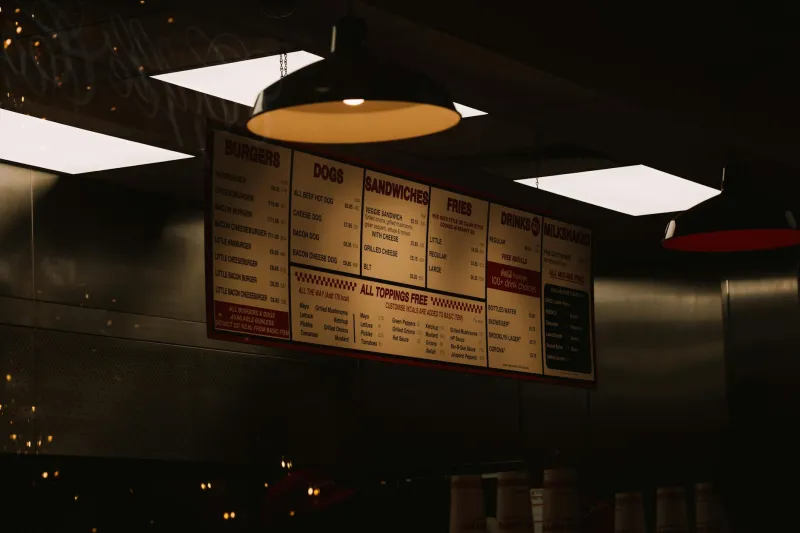
The item in question is served at Provenance, a restaurant on Bedford Avenue that describes its culinary philosophy as "aggressively intentional." The menu, printed on what appears to be reclaimed barn wood paper, lists the dish as follows: Heritage Pork Encased Protein Log — pasture-raised, nose-to-tail philosophy, snap-casing tradition, $22.
For reference, a hot dog at the ballpark runs about $6.50. A gas station hot dog, arguably more honest about its own existence, costs $1.89.
When The Food Woke Report contacted Provenance for comment, a spokesperson — identified only as "Narrative Director Beau" — released a written statement explaining that the restaurant "does not use the term 'hot dog' because it fails to honor the full biographical arc of the ingredient." The statement included the phrase "porcine journey" twice.
This is not, food industry observers note, particularly unusual.
"We are living through the golden age of culinary euphemism," says Derek Fontaine, a self-described Culinary Narrative Consultant based in Austin, Texas, who charges $400 an hour to help restaurants describe ordinary food in ways that justify extraordinary prices. "A hot dog is just a delivery vehicle for nostalgia and anxiety. Once you reframe it as a 'heritage encased protein experience,' you've given the diner permission to feel sophisticated. That permission has real monetary value."
Fontaine's current client list includes a taco stand that now describes its menu as "hand-folded masa envelopes" and a grilled cheese restaurant rebranded around "molten dairy compression between artisan carbohydrate slabs." He is, by his own admission, thriving.
The Science of Not Recognizing a Hot Dog
Thaddeus's confusion, it turns out, is statistically unremarkable.
A study conducted last year by the fictional-but-plausible Institute for Gastric Semiotics at a university that definitely exists found that 74% of Americans failed to identify a hot dog when it was described to them using language commonly found on upscale restaurant chalkboards. Subjects were read descriptions including "emulsified pork cylinder in natural casing" and "smoky encased meat baton" and asked to name the food. Most guessed charcuterie. Several said "some kind of sausage situation." One respondent said it sounded like "a very brave choice."
Only 26% correctly answered "hot dog," and of those, researchers noted, several seemed almost embarrassed to say it out loud.
"What we're observing is a linguistic displacement effect," says Dr. Miriam Clove, a food psychologist who may or may not exist but whose quotes are extremely useful. "When you strip a familiar food of its familiar name and replace it with language that signals effort, provenance, and moral seriousness, the brain essentially loses the filing cabinet. People stop tasting the food and start tasting the story of the food. The story, in this case, costs $15.50 more than the food."
Thaddeus Processes His Feelings
In the weeks since the revelation, Thaddeus has gone through what he describes as "the full stages." Denial came first — he spent three days researching whether "heritage-breed" pork products were perhaps nutritionally distinct enough from standard hot dogs to constitute a different food category. They are not. Anger followed, directed primarily at the restaurant, the menu, and at himself for never once thinking to ask why the dish didn't come with a bun until he specifically requested one and was told it was "available upon philosophical alignment."
He is now somewhere in the bargaining phase, which mostly involves telling the story at dinner parties.
"The thing is," he says, with the measured tone of someone who has rehearsed this, "I genuinely loved it. I looked forward to it. I told people about it. I used the word 'umami' in relation to it on at least four separate occasions." A long pause. "It was a hot dog. I was very happy eating a hot dog. And somehow that's the part I'm most upset about."
Provenance has since updated the menu description of the dish. It now reads: Heritage Pork Encased Protein Log — a meditation on American comfort, deconstructed and reassembled with intention. $24.
They raised the price by two dollars.
Thaddeus has not been back. Though he admits, quietly, that he has thought about it.
The Food Woke Report reached out to the hot dog for comment. It did not respond, which honestly feels right.