Weekend Warriors and Manifesto Menus: How Your Saturday Brunch Became a 47-Page Political Document
The Death of the Simple Pancake
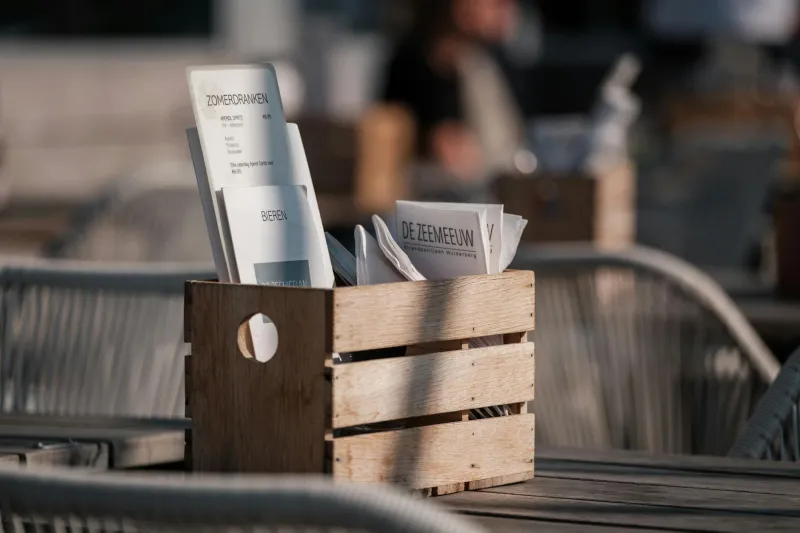
Somewhere between 2016 and the great avocado toast reckoning of 2019, American brunch menus stopped being lists of food and became manifestos. What was once a cheerful collection of eggs Benedict variations has metastasized into dense political documents that require a law degree to navigate and a philosophy PhD to fully comprehend.
I discovered this while attempting to order pancakes last Saturday at a trendy spot in Brooklyn called "Nourish & Resist." What should have been a simple transaction turned into an hour-long seminar on regenerative agriculture, indigenous land rights, and the problematic nature of maple syrup extraction in colonial New England.
The pancakes, it turns out, were listed on page 23 of a 47-page menu that included seventeen footnotes, two land acknowledgments, and a QR code linking to a 30-minute documentary about the "Violence of Vanilla."
The Anatomy of Modern Menu Manifestos
Today's brunch menu follows a predictable structure that has nothing to do with helping customers order food and everything to do with broadcasting the restaurant's entire worldview to an audience of hungover millennials who just want carbohydrates.
Page 1 always opens with a land acknowledgment that somehow manages to be both deeply sincere and completely performative. "We acknowledge that this restaurant sits on the traditional territory of the Lenape people," reads a typical example, "and we commit to honoring their legacy through our ethically-sourced heritage grains and trauma-informed hospitality practices."
Pages 2-8 contain the restaurant's origin story, invariably involving a life-changing trip to a foreign country where the owner "discovered their true calling" after eating street food that "opened their consciousness." These sections read like rejected Eat, Pray, Love chapters and always include at least three mentions of "authenticity" and one reference to a spiritual awakening.
The actual food doesn't appear until page 9, and even then, it's buried under supply chain manifestos that trace every ingredient back to its source like a genealogy project. The "Farm-to-Table Benedict" comes with a 400-word biography of the chicken who laid the eggs, complete with details about her living conditions, dietary preferences, and "commitment to sustainable laying practices."
The Footnote Industrial Complex
The real genius of modern brunch menus lies in their footnote systems, which have evolved into passive-aggressive academic papers disguised as dining information. A simple dish like "Avocado Toast" now requires six footnotes explaining everything from the carbon footprint of avocado transportation to the restaurant's position on California water rights.
Footnote culture has created an entire ecosystem of menu lawyers who specialize in crafting legally bulletproof explanations for why your $18 toast is actually a bargain when you consider the "true cost of ethical consumption." These footnotes serve as both legal protection and moral justification, allowing restaurants to charge premium prices while maintaining their progressive credentials.
My favorite example comes from a Portland establishment whose footnote for "Locally-Sourced Honey" includes this gem: "*Our honey is harvested using bee-consent protocols developed in partnership with the Pacific Northwest Pollinator Justice Coalition. Please note that bee labor cannot be considered truly ethical under capitalism, and we acknowledge the inherent violence of honey extraction while working toward a post-apiary future."
The honey costs $7 per tablespoon.
The Tipping Philosophy Dissertation
No modern brunch menu is complete without at least two pages dedicated to explaining the restaurant's tipping philosophy, which inevitably reads like a master's thesis in economic justice. These sections manage to be simultaneously condescending and guilt-inducing, explaining why their 22% automatic gratuity is actually a form of worker liberation.
"Traditional tipping culture perpetuates service industry exploitation," explains one such manifesto I encountered in Austin. "Our Living Wage Surcharge ensures that all team members receive compensation that honors their humanity while disrupting the patriarchal dynamics inherent in tip-based economies."
Translation: your $14 pancakes now cost $17.08, and you're supposed to feel good about it because you're fighting the patriarchy one overpriced breakfast at a time.
The Carbon Offset Calculation Corner
The latest trend in brunch menu manifestos is the inclusion of detailed carbon footprint calculations for every dish, complete with offset purchase options that allow diners to assuage their environmental guilt for the low price of $3.99 per entrée.
These calculations are presented with scientific precision that would make NASA proud, despite being based on methodology that's about as reliable as a weather forecast. The "Sustainability Impact Statement" for a simple omelet includes variables like "transportation emissions," "refrigeration costs," and "existential weight of industrial farming," resulting in a carbon footprint of 2.7 kilograms of CO2 equivalent.
For comparison, the same menu calculates that driving to the restaurant produces 4.2 kilograms of CO2, meaning you've already exceeded your environmental budget before you even sit down. The solution, naturally, is to purchase carbon offsets that fund "regenerative agriculture projects" in Guatemala, which sounds suspiciously like a modern version of medieval indulgences.
The Great Unread
The tragic irony of this entire phenomenon is that absolutely no one reads these menus in full. According to my highly scientific observation study (conducted over three bottomless mimosa brunches), the average customer spends approximately 47 seconds scanning the menu before giving up and ordering "whatever the pancakes are called."
Servers have adapted to this reality by developing elaborate verbal summaries that hit the highlight reel of the restaurant's political positions while steering customers toward dishes that don't require extensive ideological explanation. "The Benedict is great," they'll say, glossing over the 12-paragraph essay about cage-free chicken liberation that accompanies the dish description.
Restaurant owners seem blissfully unaware that their manifestos are going unread. They continue to expand their menu dissertations, adding new sections on regenerative agriculture, decolonizing brunch culture, and the problematic history of French toast (apparently the name is culturally insensitive, though no one can explain exactly why).
The Resistance Movement
A small but growing counter-movement has emerged in response to manifesto menu culture. These "Neo-Diner" establishments deliberately embrace menu simplicity, offering single-page laminated menus with descriptions like "Eggs. Toast. Bacon. $8."
The contrast is jarring. After months of navigating ideological breakfast documents, there's something almost revolutionary about a menu that simply lists food without explaining its position on late-stage capitalism.
But even the resistance has been co-opted. "Authentically Simple" has become its own form of branding, with restaurants charging premium prices for the luxury of not having to read a political science dissertation before ordering coffee.
The Future of Weekend Reading
As brunch menu manifestos continue to evolve, industry insiders predict the next wave will include QR codes linking to podcast series, virtual reality experiences that let you meet your farmer, and blockchain-verified supply chain documentation.
Some restaurants are experimenting with "Menu Sommeliers" – specialized staff members who guide customers through the ideological complexity of their dining choices, explaining the political implications of choosing steel-cut oats over quinoa porridge.
The ultimate goal, apparently, is to transform every weekend breakfast into an educational experience that challenges your assumptions about food, capitalism, and your own complicity in various systems of oppression.
Meanwhile, I just want pancakes.
The Surrender
I've come to accept that the simple pleasure of ordering breakfast without a political science lesson is a relic of a simpler time. Modern brunch culture demands that we engage with our food choices as moral and ethical statements, turning every meal into an opportunity for consciousness-raising.
The menus will continue to grow longer, the footnotes more elaborate, and the carbon calculations more precise. We'll keep pretending to read them while servers patiently wait for us to order the same dishes everyone always orders.
And somewhere in Brooklyn, a new restaurant is probably adding a 48th page to their menu, explaining why their new gluten-free waffle represents a form of resistance against the wheat-industrial complex.
The revolution, it turns out, will be brunched.