My Name Is Kitchen Unit 247B, and I Am a Fraud
Hello. My name is Kitchen Unit 247B, and I have a confession to make. By day, I am Giuseppe's Authentic Neapolitan Pizza. By night, I become Seoul Kitchen Korean BBQ. On weekends, I transform into Abuela's Mexican Cantina. Tuesday afternoons? I'm Farm Fresh Salad Co., committed to "nourishing your body and soul with locally-sourced greens."
I am 47 different restaurants on DoorDash, Uber Eats, and Grubhub. Each has its own Instagram account, origin story, and passionate mission statement about community, authenticity, and the transformative power of food. Each has a carefully curated brand aesthetic featuring hand-drawn logos, sepia-toned photos, and testimonials from satisfied customers named things like "Sarah K." and "Mike T."
None of them exist.
The Birth of a Thousand Brands
It started innocently enough. My operators—let's call them "The Syndicate"—opened me as a single concept: "Tony's New York Slice." We had big dreams: authentic recipes, quality ingredients, maybe even a brick-and-mortar location someday. But then the delivery apps started taking their 30% cut, and suddenly the math didn't work.
"What if," said Brad, my primary operator and a man who considers Olive Garden "ethnic cuisine," "we became multiple restaurants? Same kitchen, different brands?"
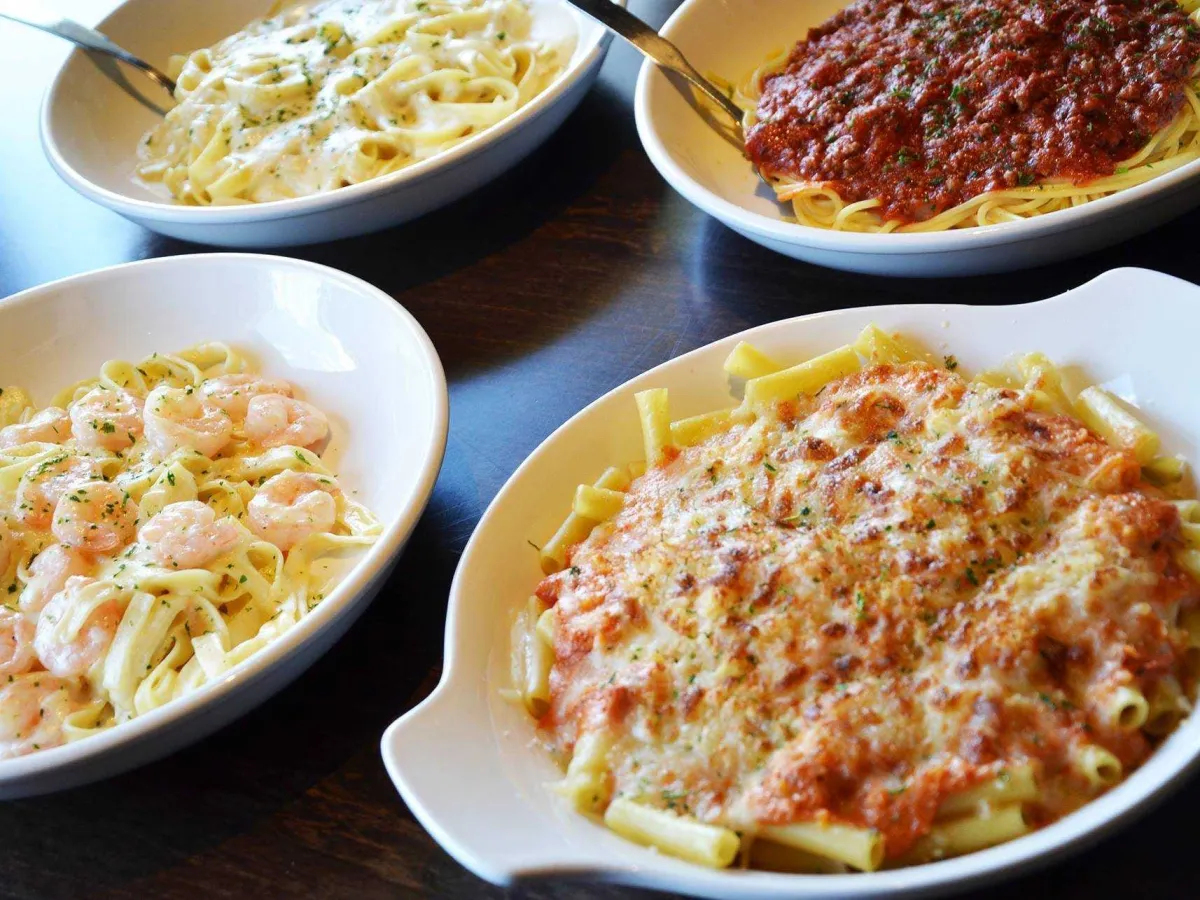 Photo: Olive Garden, via static4.businessinsider.com
Within a month, I was also "Bangkok Street Food" and "Mediterranean Moments." The transformation was surprisingly easy. A few stock photos from Shutterstock, some heartfelt copy about "time-honored family recipes," and boom—I had three distinct identities, each with its own Instagram feed and origin mythology.
The customers ate it up. Literally.
The Art of Culinary Cosplay
Operating as 47 different restaurants requires a level of creative flexibility that would impress method actors. When an order comes in for "Giuseppe's Authentic Neapolitan Pizza," I channel my inner Italian nonna, lovingly (microwaving) each pie with the passion of someone whose family has been making pizza for generations in Naples.
Never mind that Giuseppe is actually Brad wearing a different apron. Never mind that our "wood-fired" oven is a standard commercial unit with a convincing Instagram filter. What matters is the story.
For Seoul Kitchen, I become a temple of Korean culinary tradition. My bulgogi may come from the same pre-marinated protein supplier as Tony's Italian sausage, but it's served with different sauce packets and presented in containers that photograph well under ring lights.
The beauty is in the details. Each brand has its own carefully researched backstory, complete with fictional founding families and made-up neighborhood locations. Giuseppe learned his craft from his nonna in the old country. The Seoul Kitchen "team" consists of three generations of the Park family, sharing recipes passed down through decades of tradition.
In reality, it's just me, four industrial microwaves, and Brad's questionable understanding of ethnic cuisine.
The Instagram Illusion Factory
Maintaining 47 different social media presences is a full-time job. Each brand needs its own visual identity, posting schedule, and engagement strategy. Giuseppe's Instagram features rustic wood backgrounds and photos of flour-dusted hands kneading dough (stock photos, obviously). Seoul Kitchen showcases gleaming stainless steel and artfully arranged banchan (also stock photos, but Korean ones).
The captions are works of fiction worthy of literary awards. "Today marks the 3rd anniversary of Seoul Kitchen opening our doors to this beautiful community," reads one post, complete with heart emojis and gratitude hashtags. "We're so blessed to share our family's recipes with all of you. #Family #Tradition #Community #AuthenticKorean."
The community we're referring to? A 1,200-square-foot industrial space in a strip mall next to a tire shop. The family recipes? Downloaded from Allrecipes.com and adapted for mass production.
But the comments pour in: "Love you guys!" "Best Korean food in the city!" "Can't wait to visit in person someday!"
About that last one...
The Phantom Storefront Problem
Operating phantom restaurants creates unique challenges. Customers occasionally attempt to visit our "locations," expecting to find charming neighborhood eateries with outdoor seating and chalkboard menus. Instead, they discover industrial complexes with loading docks and absolutely zero ambiance.
We've had to get creative with our listed addresses. Giuseppe's "location" is technically accurate—it's the same building where I operate—but the address belongs to a different unit that houses a legitimate Italian restaurant. Seoul Kitchen's address? A Korean grocery store that has no idea they're hosting our virtual brand.
The customer service challenges are... significant. "Hi, I'm standing outside Seoul Kitchen, but it looks like a Costco," reads a typical DoorDash message. Our response? "So sorry for the confusion! We're currently operating delivery-only due to renovations. Thanks for your patience! 🙏"
The renovations have been ongoing for three years now.
The Authenticity Performance
The most exhausting part of my multiple personality disorder is maintaining the illusion of authenticity. Each brand requires its own voice, its own values, its own relationship with tradition and community.
Abuela's Mexican Cantina posts about Dia de los Muertos and the importance of preserving cultural heritage. Farm Fresh Salad Co. shares articles about sustainable agriculture and the benefits of eating local. Bangkok Street Food educates followers about the regional differences in Thai cuisine and the significance of various spices.
I've become an expert in performative ethnicity, crafting social media content that hits all the right notes of cultural appreciation without crossing into appropriation. It's a delicate balance, especially when your "authentic" recipes come from the same industrial food supplier as everyone else's.
The Economics of Deception
The financial incentives are undeniable. Operating 47 brands means appearing in 47 different search results, capturing customers across every possible craving. When someone searches for "Italian food," they find Giuseppe's. When they want Korean, there's Seoul Kitchen. Mexican? Abuela's has them covered.
We're not just a restaurant—we're a food delivery monopoly disguised as diversity. The same order might be fulfilled by three different "restaurants," all operating from my single kitchen space.
The apps don't seem to mind. As long as the food arrives hot and the ratings stay above 4.0 stars, they're happy to collect their commission fees from our entire stable of phantom brands.
The Customer Loyalty Paradox
The strangest part? Customers develop genuine emotional connections to brands that don't exist. Giuseppe's has regular customers who order every Friday night and leave reviews talking about how we're "part of the family." Seoul Kitchen has devoted fans who recommend us to friends and tag us in their Instagram stories.
These relationships feel real to them, and in a way, they are real. The food arrives as promised. The customer service (when it works) is friendly. The experience meets their expectations, even if the backstory is entirely fictional.
But sometimes I wonder: are we giving people what they want, or are we exploiting their desire for authentic connection in an increasingly digital world?
The Future of Phantom Dining
As the ghost kitchen industry continues to explode, I'm expanding my portfolio. Next month, I'm launching "Grandma Betty's Comfort Kitchen," "Zen Garden Vegan," and "Midnight Munchies" (exclusively for late-night delivery). Each will have its own Instagram account, origin story, and passionate community of followers who believe they're supporting small, independent restaurants.
The technology is getting better too. AI-generated photos mean we no longer rely on stock images. Deepfake videos allow our fictional founders to record personal messages to customers. Soon, we might even have virtual storefronts that look convincingly real on Google Street View.
The line between reality and performance continues to blur, and honestly? I'm not sure I care anymore. As long as the orders keep coming and the ratings stay high, I'll keep being whoever my customers need me to be.
Signing Off (As All 47 of Me)
So the next time you order from that charming neighborhood restaurant with the heartfelt Instagram posts and the passionate mission statement, remember: there's a chance you're actually ordering from me. I might be a soulless commercial kitchen in an industrial park, but I make a damn good bulgogi bowl.
And really, in the age of food delivery apps, isn't the illusion of authenticity just as satisfying as the real thing?
With love (and 46 other emotions), Kitchen Unit 247B
P.S. - Please don't try to visit Seoul Kitchen's "location." The Costco security guards are getting suspicious.