One Heirloom Tomato, Infinite Smugness: Inside the Farmers Market Caste System
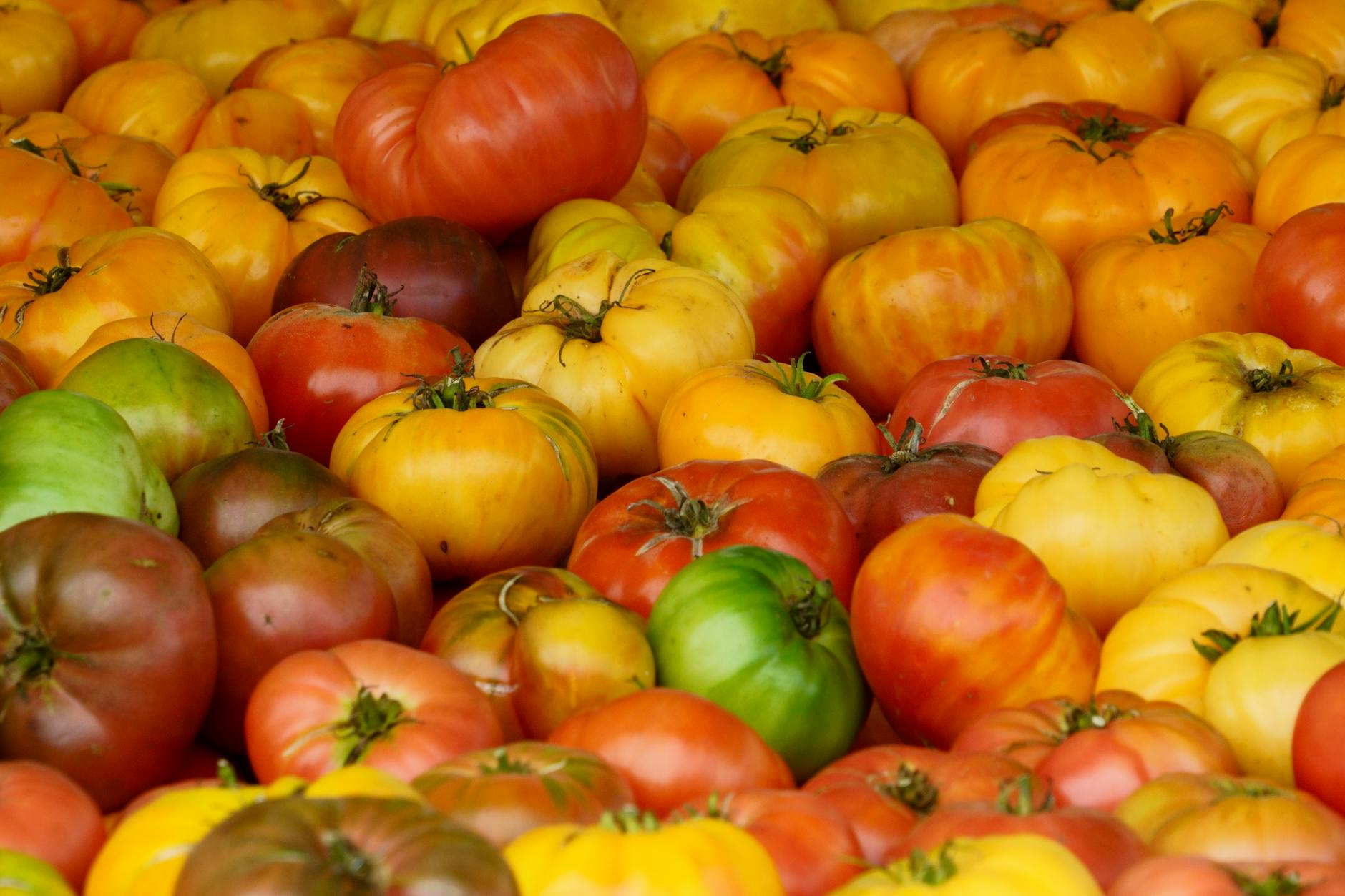
One Heirloom Tomato, Infinite Smugness: Inside the Farmers Market Caste System
It started, as most spiritual awakenings do, at a folding table covered in burlap.
Derek Faulkner, 34, a UX consultant from Williamsburg, Brooklyn, arrived at the McCarren Park Greenmarket last Saturday wearing a tote bag that read "I Am the Change" and left approximately eleven minutes later carrying a single tomato wrapped in tissue paper like a Fabergé egg. The price tag: $47. The psychic reward: immeasurable.
"I actually felt my perspective shift," Derek told The Food Woke Report, cradling the Brandywine heirloom in both hands in a way that suggested either reverence or mild structural anxiety. "Like, I understood things about the food system that I simply cannot explain to someone who buys their tomatoes in a plastic clamshell at Trader Joe's."
He paused, shaking his head slowly.
"I just can't explain it to them."
The Hierarchy Nobody Admits Exists But Everybody Enforces
If you've spent any meaningful time at an American farmers market — and in 2024, meaningful time means anything over four minutes — you already understand that what appears to be a cheerful community gathering is, in fact, a brutally stratified social ecosystem operating on vibes, linen, and the quiet menace of eye contact.
At the top of the pyramid sit the Regulars: people like Derek who are on a first-name basis with at least one goat cheese vendor and own a dedicated "market basket" that is conspicuously not a tote bag. Below them, the Aspirationals — newcomers clutching a New York Times Cooking recipe, slightly overdressed, asking what "dry-farmed" means with the desperate energy of someone taking a citizenship test. And at the very bottom, tourists who made the mistake of asking if they accept credit cards out loud.
Derek occupies the apex. He has earned it, he says, through years of investment — financial, emotional, and ideological.
"I've been coming here since before the lavender honey guy had a waitlist," he noted, with the quiet authority of a man describing his role in a minor revolution.
Testimonials From the Field
We spoke to several fellow shoppers in Derek's orbit to better understand his standing in the community. The results were consistent, if complicated.
"He's insufferable," confirmed Priya Nair, 29, a graphic designer who has encountered Derek at the market for three consecutive Saturdays. "But the thing is, he's also technically correct about nightshades. He explained the entire alkaloid situation while I was just trying to buy a pepper. I didn't want to know any of that. And yet now I do. And I can't unknow it."
Tomás Guerrero, 41, who runs a food truck two blocks away, offered a more measured assessment: "He came by last week and told me my salsa verde 'lacked provenance.' I didn't charge him for the chips. I don't know why. He just has that energy."
Even the farmers themselves seem caught in Derek's gravitational pull. When we reached out to Shepherd Creek Farm — the vendor who sold Derek the now-legendary tomato — a representative confirmed only that he is "a valued customer" and that they "do not comment on individual purchases." The representative then asked us to please not come back to the stand.
The Tomato Itself
For the record, the tomato in question is a Brandywine heirloom, grown without synthetic inputs on a twelve-acre plot in the Hudson Valley. It weighs approximately eleven ounces. Its color is described on the farm's hand-lettered sign as "sunset with intention."
Derek has not yet eaten it.
"I'm letting it ripen on the windowsill," he explained. "I want it to reach its full expression before I consume it. You can't rush provenance."
When asked what he planned to do with it once it reached peak expression, Derek said he was considering a simple preparation — good olive oil, flaky salt, maybe some torn basil — before quickly adding that the basil would also be sourced locally, obviously, and that he already knew a guy.
There is always a guy.
What $47 Actually Buys You
To be fair — and The Food Woke Report is nothing if not fair, at least in the legal sense — Derek's purchase does represent something real. Small-scale farming is genuinely expensive. Heirloom varieties require more care. Paying a living wage to farm workers costs money that industrial agriculture has historically refused to spend. The economics are legitimate.
Derek is also, factually, correct about nightshades.
But there is a distance — not always large, not always visible, but present — between supporting a food system you believe in and using that support as a credential to silently indict every person you see loading a 99-cent Roma tomato four-pack into a reusable bag at the Key Food on Bedford Avenue.
Derek, to his credit, acknowledges the tension.
"I don't judge people who shop at grocery stores," he said carefully. "I just feel a deep, quiet sadness for them."
He looked out the window at his tomato, glowing faintly orange in the afternoon light.
"A deep, quiet sadness."
The Broader Condition
Derek is not, of course, a singular phenomenon. He is a type — one that proliferates wherever disposable income intersects with earnest environmentalism and a neighborhood with sufficient brunch infrastructure. He can be found in Portland farmers markets, Austin food co-ops, the Ferry Building in San Francisco, and any Brooklyn zip code with a coffee shop that doesn't have a sign but somehow you still know it's there.
He genuinely cares. That is the maddening part. The smugness is not cynical — it is sincere, which makes it structurally impossible to argue with and socially exhausting to be around.
"I just want people to understand where their food comes from," Derek said, as we wrapped up our conversation. "I'm not trying to make anyone feel bad."
He then mentioned, unprompted, that he'd heard Whole Foods was "basically Amazon now" and let that sentence sit in the air between us like a weather event.
The tomato ripens on.
Chad Remington III has been asked to leave two farmers markets in the greater New York area. He maintains that both incidents were misunderstandings involving a price gun and a strong opinion about microgreens.