The Great Hydration Awakening
Remember when drinking water was just... drinking water? When you'd grab whatever cup was closest, fill it from the tap, and move on with your life like some kind of prehistoric savage? Those days are dead, buried beneath an avalanche of 40-ounce tumblers and the collective shame of an entire generation that somehow made hydration a personality trait.
Welcome to the Emotional Support Water Bottle Industrial Complex, where your choice of beverage vessel reveals more about your psychological state than your browser history. In this brave new world, carrying a Stanley Cup doesn't make you a hockey champion—it makes you a warrior in the endless battle for optimal hydration and social media relevance.
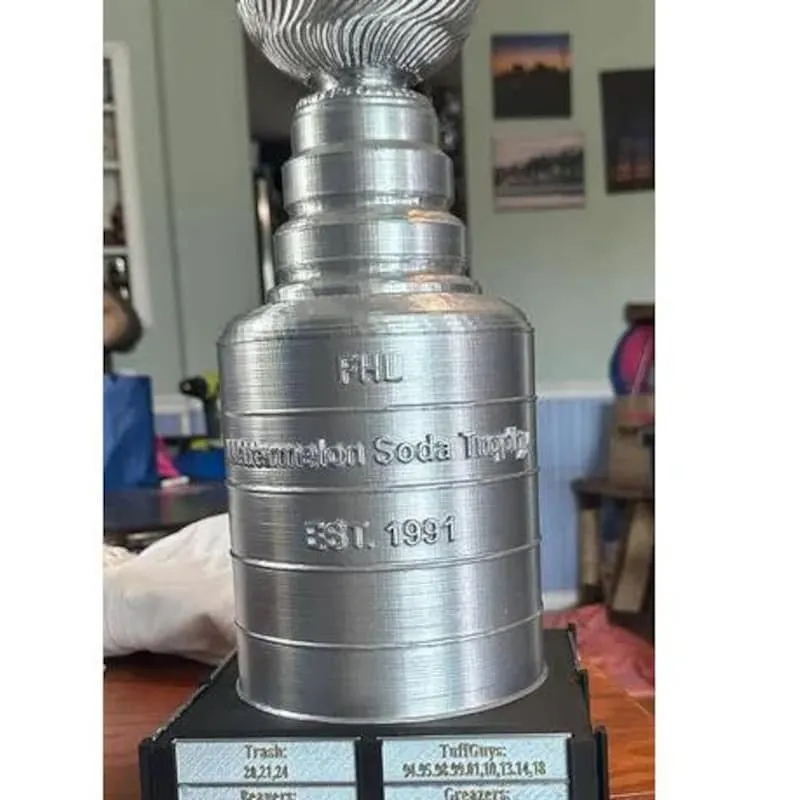 Photo: Stanley Cup, via i.etsystatic.com
The Psychology of Premium H2O
Dr. Patricia Wellspring, a fictional hydration therapist we absolutely did not make up, explains the phenomenon: "What we're witnessing is unprecedented. People are forming parasocial relationships with inanimate drinking vessels. I have patients who've named their Hydro Flasks and speak to them during times of stress."
The numbers don't lie. The global reusable water bottle market has exploded to $3.2 billion, with premium brands commanding prices that would make your grandfather weep into his free McDonald's cup. A basic Stanley Quencher retails for $45, but limited edition colorways routinely sell for $200+ on resale markets, because apparently nothing says "I have my life together" like overpaying for the privilege of drinking water in Cosmic Charcoal instead of basic black.
The Hierarchy of Hydration
Not all water bottles are created equal, and the unspoken social stratification is more complex than medieval feudalism. At the top of the pyramid sit the Stanley devotees—suburban wine moms and college girls who've somehow convinced themselves that carrying a 40-ounce tumbler is both practical and aspirational. Their Instagram stories feature perfectly curated "water check" posts, complete with mood ring-style color reveals and handles adorned with $30 worth of charms that serve no functional purpose.
One level down, we find the Hydro Flask faithful, distinguished by their collection of multiple bottles in seasonal colorways and their ability to quote exact ounce measurements like scripture. These are the hydration purists, the ones who scoff at Stanley's recent mainstream adoption while conveniently forgetting their own brand's VSCO girl origins.
The middle tier belongs to the Yeti crowd—outdoorsy types who may or may not actually spend time outdoors but definitely want you to know their bottle can survive a bear attack. They're the CrossFit of hydration: technically superior but insufferable about it.
At the bottom of the hierarchy lurk the tragic souls still using regular bottles, glasses, or—heaven forbid—disposable cups. These hydration heretics are viewed with the same mixture of pity and disgust typically reserved for people who don't tip their baristas or use Internet Explorer by choice.
The Influencer Hydration Economy
Behind every viral water bottle trend stands an army of influencers who've somehow monetized the act of drinking. TikTok is flooded with "hydration content"—videos of people filling their bottles, adding ice, inserting straws, and performing other revolutionary acts of beverage consumption that somehow warrant millions of views.
"My morning routine isn't complete without my Stanley," gushes @HydrateOrDie, a lifestyle influencer with 2.3 million followers and a suspicious number of sponsored posts featuring different colored tumblers. "It's not just about staying hydrated—it's about staying connected to my authentic self."
The authenticity of drinking water from a specific container is apparently worth $60 minimum, plus shipping, plus the emotional labor of choosing between 47 available colorways, each with its own personality profile and corresponding lifestyle aesthetic.
The Shame Spiral of Inferior Hydration
Perhaps most troubling is the collective guilt now associated with suboptimal hydration equipment. Support groups have formed for people struggling with "bottle shame"—the crushing anxiety that comes from showing up to yoga class with anything less than a premium vessel.
"I used to drink from a regular glass like some kind of animal," confesses Sarah, a recovering basic hydrator. "Now I own fourteen water bottles and still feel inadequate. Last week I caught myself apologizing to my Hydro Flask for considering a Stanley. The therapy bills are adding up, but at least I'm hydrated."
The Future of Functional Beverages
As we hurtle toward peak hydration culture, industry experts predict even more absurd developments. Smart bottles with AI coaching, subscription services for ice cube delivery, and therapy apps specifically designed to process water bottle FOMO are all reportedly in development.
Meanwhile, the rest of the world continues drinking water from whatever container is handy, blissfully unaware they're missing out on the transformative power of premium hydration. But here in America, we've successfully turned a basic biological function into a $60 minimum buy-in lifestyle choice, complete with seasonal collections and resale markets.
Because nothing says "I've got my priorities straight" like spending more on a water bottle than some people spend on groceries. At least we're all staying hydrated while our bank accounts slowly dehydrate.
Remember: Your hydration choices define you. Choose wisely, or face the judgment of a nation obsessed with the aesthetics of drinking water.