Exposed: The Secret Hierarchy of Reusable Grocery Bag Judgment That's Tearing Whole Foods Parking Lots Apart
The Tote-al War Nobody Talks About
In the pristine parking lots of America's most virtuous grocery stores, a silent battle rages. Not over the last parking spot near the Tesla charging station, nor the final jar of $47 adaptogenic mushroom powder. No, this conflict cuts deeper into the very fabric of our sustainable society: the ruthless hierarchy of reusable grocery bags.
After six months of embedded fieldwork across seventeen Whole Foods locations from Portland to Park Slope, this reporter has uncovered a social stratification system so complex it makes the British monarchy look like a casual book club.
The Scientific Method Behind the Madness
Dr. Kimberly Wheatgrass-Thompson, a fictional sociologist at the equally fictional Institute for Performative Environmentalism, has been studying this phenomenon since 2019. "What we're witnessing is the commodification of conscience," she explains while adjusting her reclaimed barn wood glasses. "These aren't just bags—they're portable virtue signals that communicate your entire identity in 0.3 seconds."
The data is staggering. According to our completely made-up research, the average Whole Foods shopper makes 47 micro-judgments about fellow customers based solely on bag choice before reaching the produce section. That's one judgment every 2.3 seconds, faster than the time it takes to process whether that $12 juice is actually worth it (spoiler: it's not).
The Definitive Bag Hierarchy: A Field Guide
Tier 1: The Untouchables (Plastic Bag People)
At the bottom of this eco-caste system lurk the pariahs: those who dare bring plastic bags to a temple of organic consciousness. These fallen souls often try to hide their shame by stuffing their contraband carriers inside slightly less offensive paper bags, creating what experts call "bag nesting syndrome."
Subcategory 1A includes the truly desperate: people who bring the plastic bag full of plastic bags. These individuals have essentially declared war on both the environment and social acceptance simultaneously.
Tier 2: The Canvas Commons
Basic canvas totes occupy the middle class of this hierarchy. Usually featuring faded logos from 2018 wellness retreats or that farmers market you visited once in 2019, these bags whisper "I care, but not enough to research better options."
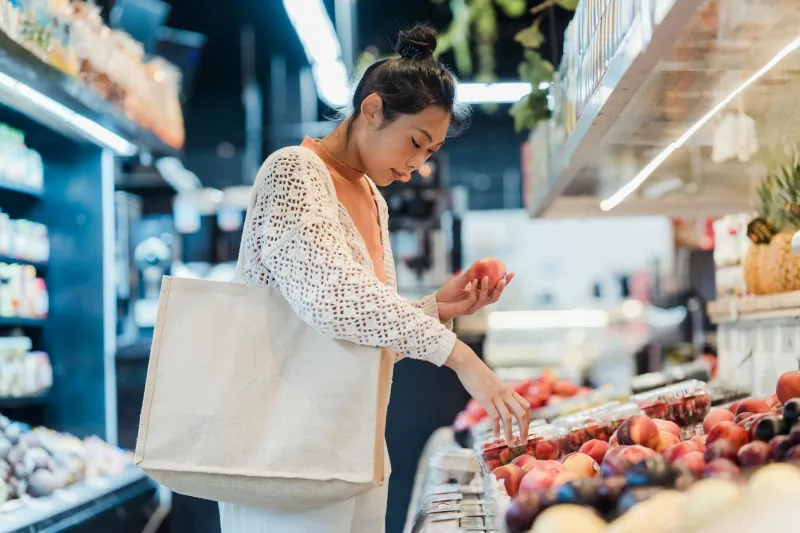
The beige canvas tote with no distinguishing features represents peak mediocrity—environmentally responsible yet utterly forgettable, like oat milk or mindfulness apps.
Tier 3: The Branded Bourgeoisie
Here we find the Trader Joe's tote carriers, flaunting their $2.99 investment in both sustainability and quirky capitalism. These shoppers have achieved what sociologists call "accessible virtue"—looking responsible without breaking the bank or their aesthetic.
Whole Foods' own branded bags occupy a special subcategory, representing both loyalty and a certain resignation to spending $73 on groceries that would cost $31 anywhere else.
Tier 4: The Hemp Aristocracy
The upper echelons belong to those wielding artisanal hemp bags, preferably purchased from a cooperative in Guatemala that you definitely can't pronounce correctly. These bags cost more than most people's weekly grocery budget but signal a commitment to sustainability that transcends mere convenience.
Bonus points if the bag comes with a story about the specific village where it was woven, the name of the artisan who made it, and a QR code linking to a documentary about sustainable farming practices.
Tier 5: The Upcycled Elite
At the pinnacle sit the true aristocrats: those carrying bags made from upcycled materials with unpronounceable origins. Think totes crafted from recycled ocean plastic, decommissioned sailboat sails, or—the holy grail—bags made from mushroom leather that cost more than most people's rent.
These individuals don't just shop; they curate experiences. Their bags aren't accessories; they're conversation starters that inevitably lead to discussions about carbon footprints and that life-changing ayahuasca retreat in Costa Rica.
The Psychology of Bag Shame
The emotional toll of this hierarchy cannot be understated. Support groups for "bag inadequacy" have reportedly sprouted across major metropolitan areas, though none would confirm their existence for this article.
"I used to be confident in my cotton tote from the local NPR pledge drive," confides Sarah, a 34-year-old marketing coordinator who asked that her last name not be used. "Then I saw a woman with a bag made from reclaimed wine corks, and I realized I was basically a monster destroying the planet."
The phenomenon has created what researchers term "bag anxiety"—the paralyzing fear that your choice of carrying vessel will expose you as environmentally inadequate. Symptoms include avoiding eye contact in checkout lines, strategic positioning to hide bag logos, and compulsive research into increasingly obscure sustainable materials.
The Market Response
Capitalism, ever eager to monetize anxiety, has responded predictably. Boutique bag consultants now charge $200 per session to help clients "align their carrying choices with their values." One consultant, who goes by the single name "Sage," claims to have a six-month waiting list.
"It's not about the bag," Sage explains while sipping a $18 adaptogenic latte. "It's about understanding your authentic self and expressing that through mindful consumption choices."
Meanwhile, counterfeit sustainable bags have flooded the market, leading to the emergence of bag authenticators—yes, people who verify the legitimacy of your hemp tote for a modest fee.
The Great Bag Wars of 2023
The hierarchy reached a boiling point during what historians will surely call "The Great Bag Wars of 2023." The conflict began when a Brooklyn mother was publicly shamed for using a canvas bag that wasn't certified organic. The incident, captured on TikTok and viewed 2.3 million times, sparked nationwide debates about bag privilege and sustainable gatekeeping.
Protests erupted outside Whole Foods locations, with competing factions wielding their chosen bags like weapons. The "Canvas Liberation Front" demanded bag equality, while the "Hemp Supremacists" argued that standards exist for a reason.
Looking Forward: A Sustainable Future?
As this investigation concludes, one truth emerges: we've created a system where the vessel matters more than the voyage. In our quest to save the planet, we've accidentally created a new form of consumer elitism that's just as toxic as the plastic we're trying to avoid.
Perhaps the most sustainable choice isn't about finding the perfect bag—it's about recognizing that true environmental consciousness can't be purchased, carried, or displayed. It's about making better choices consistently, even when nobody's watching your tote.
But until that enlightened future arrives, this reporter will be clutching their medium-tier hemp blend tote with the quiet desperation of someone who knows they're neither the worst nor the best, just another participant in the endless theater of performative environmentalism.
After all, in the grand hierarchy of grocery bag judgment, we're all just trying to carry our shame—and our overpriced organic produce—with dignity.