Screen Hostage Chronicles: My Descent into Madness at the Hands of America's Most Passive-Aggressive Payment Device
The Ambush
It happened at 2:47 PM on a Tuesday at what I can only describe as a snack kiosk with delusions of grandeur. I wanted pretzels. Simple, twisted carbs with enough salt to justify my existence. What I got instead was a masterclass in emotional manipulation courtesy of a 10-inch screen that had clearly been programmed by someone who studied interrogation techniques at Guantanamo.
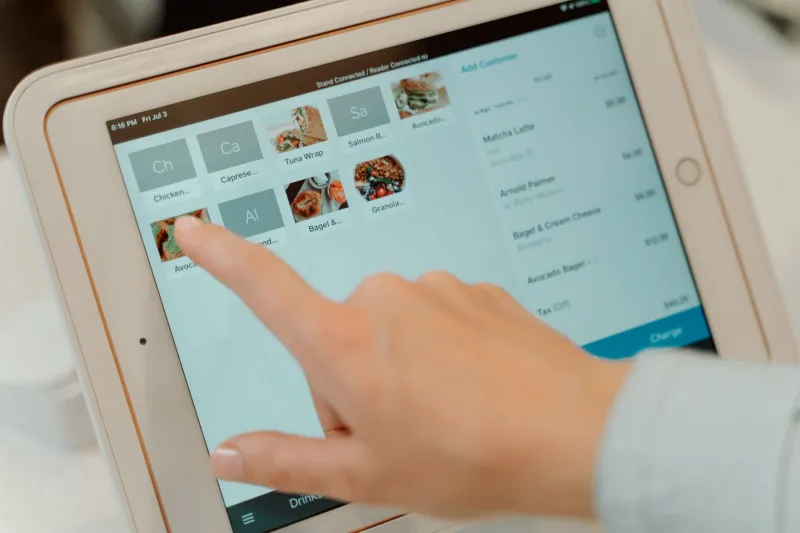
The pretzel vendor—let's call him Tyler because he looked exactly like every Tyler who's ever disappointed his parents—slid the iPad toward me with the practiced nonchalance of a dealer pushing his first free hit. "Just tap when you're ready," he said, then executed what I can only describe as the most aggressive eye contact I've experienced outside of a therapy session.
The Screen of Infinite Judgment
The options appeared like digital vultures circling my financial dignity: 18%, 22%, 25%, and 30%. But wait—there's more! A cheerful little "Custom" button sat there like a dare, practically screaming "Are you cheap enough to calculate your own percentage, you monster?"
The screen began its slow, deliberate rotation. This wasn't accidental. This was choreographed psychological warfare. As the device turned toward Tyler, I watched his eyebrows perform a subtle dance of expectation. The pretzel bag sat between us like evidence in a moral crime scene.
The Pause of Eternal Damnation
I've experienced many uncomfortable silences in my life. Job interviews. First dates. That time I accidentally called my teacher "Mom" in third grade. None of them compared to the cosmic void that opened up as my finger hovered over that screen.
Twenty-five percent on a $6 bag of pretzels. That's $1.50. For what, exactly? Tyler had literally reached into a bin, grabbed a bag, and handed it to me. The entire transaction took fourteen seconds. I'd calculated it. That's $385 per hour if we're being generous with the math.
But there I stood, trapped in what behavioral economists probably have a fancy name for but I'll call "The Guilt Spiral of Snack-Based Self-Worth." Because somewhere in my lizard brain, a voice was whispering that maybe Tyler had a family. Maybe this $1.50 was the difference between his kid getting new shoes or walking to school in cardboard.
The Great Tipping Migration
When did this happen? When did the sacred ritual of restaurant tipping—already a bizarre American tradition that confuses the rest of the world—metastasize into every conceivable transaction? I've been asked to tip at self-serve frozen yogurt places where I literally did everything myself except install the machines. I've been guilted into gratuity at coffee shops where the barista's only contribution was pointing at the pastry case with visible disdain.
Last week, I swear a vending machine gave me judgmental beeps when I didn't add a tip for my Diet Coke. The robots are learning, people. And they're learning that Americans are psychologically incapable of saying no to a screen that's asking for money while another human watches.
Field Guide to Screen Survival
After extensive research (read: trauma), I've identified the key warning signs of a tipping screen ambush:
The Slow Rotation: The device turns toward you with the deliberate menace of a horror movie reveal. This gives you time to contemplate your choices and, more importantly, your failures as a human being.
The Strategic Hover: The employee positions themselves at the perfect distance—close enough to witness your moral reckoning, far enough away to maintain plausible deniability about their emotional manipulation tactics.
The Options Hierarchy: Notice how 18% is always the lowest option, making it feel stingy even though it used to be the standard for actual full-service dining. It's like they're daring you to be the person who chooses the "cheap" option.
The Custom Trap: That innocent "Custom" button is actually a psychological minefield. Choose it, and you're announcing to everyone in line that you're either exceptionally generous or pathologically frugal. There's no middle ground.
The $1.50 That Changed Everything
I pressed 25%. Of course I did. Tyler's eyebrows relaxed into what might have been gratitude or might have been the smug satisfaction of a predator who'd successfully cornered his prey. He handed me my overpriced bag of carbs with a smile that didn't reach his eyes.
As I walked away, clutching my $7.50 pretzel purchase like it contained the secrets of the universe, I realized I'd just participated in the most successful psychological experiment in modern American commerce. We've created a system where guilt is the primary currency, and we're all paying premium rates.
The pretzels, for what it's worth, were fine. Not great. Not terrible. Just fine. Which is probably the most damning review of all—I paid a 25% premium for fine. And somewhere in a boardroom, executives are high-fiving over quarterly reports that show Americans will literally tip for anything as long as you make them feel bad about not doing it.
The New Normal
The tipping screen epidemic represents something deeper about our current moment: we've gamified guilt. Every transaction is now a moral test, and failing means confronting the possibility that you might be the kind of person who doesn't tip the pretzel guy.
So here's my confession: I am a tipping screen hostage. I've been captured by the rotating iPad empire, and I'm not sure there's a way out. Because the alternative—being the person who hits "No Tip" while Tyler watches—feels worse than financial death by a thousand small gratuities.
At least the pretzels had good salt coverage. That's something, right? Right?