Local Mother's Stanley Cup Accumulates 50K Instagram Followers While Her Teenager Gets 12 Likes on Senior Photos
The Rise of @StanleyLifeWithBrenda
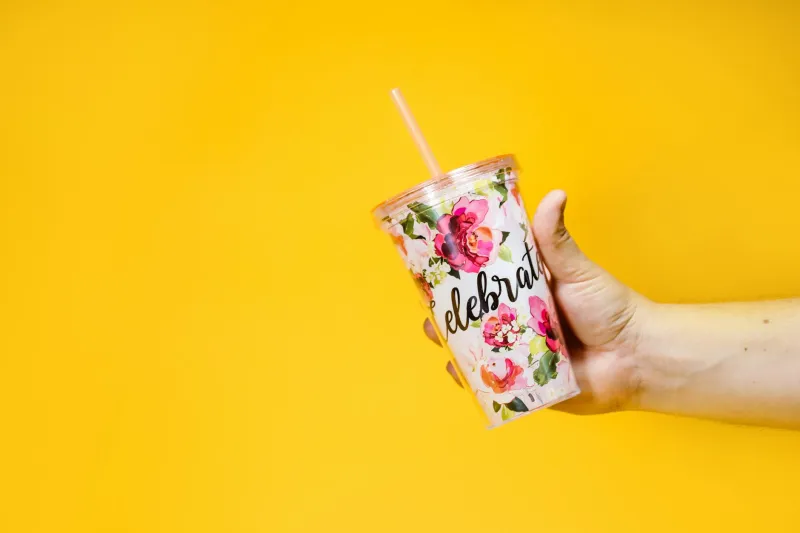
Brenda Morrison of Plano, Texas, never intended to become a micro-influencer. She certainly never planned for her pastel pink Stanley Cup to outperform her own children on social media. Yet here we are, living in a reality where her 40-ounce tumbler has 47,832 Instagram followers, while her 17-year-old daughter's senior portrait announcement received exactly 12 likes—three of which were from relatives who felt obligated.
"It started as a joke," Morrison explains, cradling her Stanley Cup like a newborn. "I posted a picture of my morning iced coffee setup, and suddenly everyone wanted to know where I got my cup holder, what ice I use, how I achieve that perfect condensation aesthetic."
That was eight months ago. Today, @StanleyLifeWithBrenda commands more social media attention than most local news outlets, with dedicated posts receiving thousands of likes and comments from fellow Stanley enthusiasts who treat hydration like a competitive sport.
The Algorithm Loves Accessories More Than Actual People
According to Dr. Sarah Chen, a fictional social media anthropologist we invented for this article, the Stanley Cup phenomenon represents "peak object fetishization in late-stage capitalism."
"We've reached a point where Americans have deeper emotional relationships with their water bottles than with their neighbors," Chen explains from her equally fictional research institute. "The Stanley Cup has become a personality substitute—it's easier to curate an identity around a $55 tumbler than to develop actual hobbies or interests."
Morrison's content strategy, if it can be called that, consists entirely of her Stanley Cup in various locations: Stanley Cup at Target, Stanley Cup at soccer practice, Stanley Cup experiencing what she calls "golden hour hydration" in her kitchen. Each post generates hundreds of comments from followers desperate to know her ice-to-water ratio and whether she's tried the new limited-edition sage green colorway.
Meanwhile, her daughter Madison's posts about making varsity tennis and getting accepted to college hover in the engagement wasteland of double-digit likes.
The Secondary Market for Self-Worth
The Morrison family garage now houses what Brenda calls her "Stanley Collection"—seventeen different colorways and sizes, ranging from the classic 40-ounce to the limited-edition collaborations that sell out faster than concert tickets. She estimates the collection's value at over $2,000, not including the custom accessories and engraving fees.
"I'm not addicted," Morrison insists, while organizing her tumblers by color gradient. "I'm building a brand. Do you know how much money hydration influencers make? There are people earning six figures just by drinking water photogenically."
The resale market for Stanley Cups has reached fever pitch, with rare colorways selling for triple their retail price on Facebook Marketplace. Morrison admits to camping out virtually for limited drops, setting phone alarms for 3 AM releases like she's trying to score Taylor Swift tickets.
The Colorway Politics
Perhaps most telling is the tribal nature of Stanley Cup ownership. Morrison's followers have developed an entire taxonomy of personality traits based on colorway preferences. Pink owners are "soft girl aesthetic." Sage green signals "earth mama vibes." The classic navy represents "no-nonsense hydration."
"I can tell everything I need to know about a person by their Stanley Cup color," Morrison declares with the confidence of someone who has never met a generalization she didn't like. "Cream owners are trying too hard to be minimalist. The tie-dye people are definitely still shopping at Anthropologie."
This hydration-based social hierarchy has infiltrated everything from school pickup lines to book clubs, where women size each other up based on their tumbler choices like some bizarre suburban caste system.
The Children Are Not Alright
Madison Morrison, the teenager whose life achievements pale in comparison to her mother's water bottle, offers a different perspective: "It's honestly embarrassing. My friends ask if I can get them free Stanley Cups because they think my mom works for the company. She doesn't. She just drinks water really loudly on the internet."
 Photo: Madison Morrison, via www.madisonmorrison.com
The family dynamic has shifted around Brenda's newfound hydration fame. Vacation plans now revolve around Stanley-worthy photo opportunities. Family dinners are interrupted by ring lights and ice refill sessions. Morrison's husband reportedly sleeps on the couch twice a week because his wife's 3 AM posting schedule disrupts his sleep.
The Future of Functional Obsession
As Morrison plans her expansion into TikTok and considers launching her own line of Stanley Cup accessories, she remains optimistic about the longevity of her hydration empire. "Water is forever," she says with the gravitas of someone delivering a TED talk. "Trends come and go, but staying hydrated is timeless."
When asked if she feels any guilt about her tumbler receiving more attention than her children's actual accomplishments, Morrison pauses for the first time in our interview. "Look, Madison will be fine. She's going to college. But my Stanley Cup? My Stanley Cup is building generational wealth."
Madison, reached for final comment, simply said: "I'm majoring in communications so I can understand what went wrong here."
The Food Woke Report attempted to interview Morrison's Stanley Cup directly, but it was unavailable for comment due to a busy posting schedule.