Ghost Diners of America: The Secret Epidemic of People Who Reserve Tables as a Form of Emotional Insurance
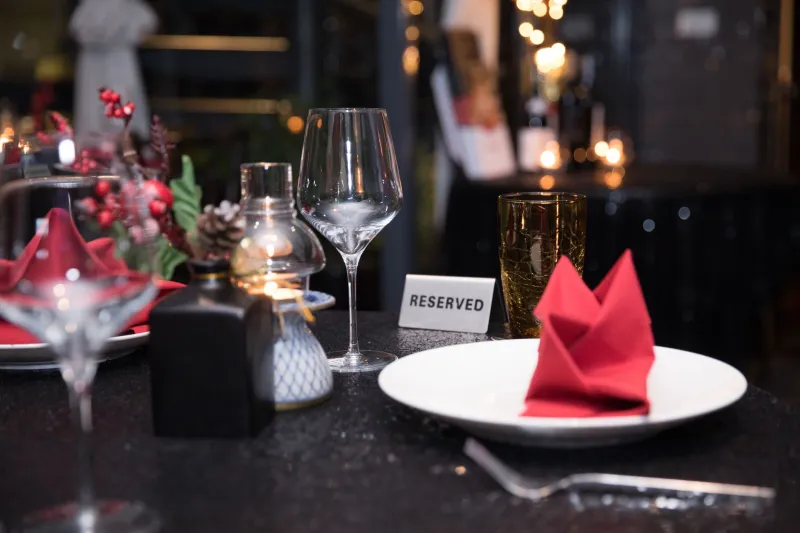
Somewhere right now, a restaurant in Scottsdale is holding a four-top for a party of three named "Brittany" who made the reservation forty-six days ago during a moment of optimism and has since moved on emotionally, spiritually, and geographically. The table will sit empty at 7:15. The server will check the door twice. The host will eventually reset it with the quiet resignation of a man who has seen this before — because he has seen this before, every single weekend, for the last three years.
Welcome to the Reservation Industrial Complex, where the act of booking a table has become entirely decoupled from the act of actually eating at one.
The Psychology of the Phantom Booking
Clinical experts — the ones who accept DoorDash gift cards as co-pay — have a name for what's happening here. They call it reservation hoarding, and it operates on the same neurological reward pathway as buying a lottery ticket. The dopamine hit arrives at the moment of confirmation. The little email that says You're all set at Osteria Luminara for Saturday at 7:30! does something to the American brain that actual attendance simply cannot replicate.
"The reservation is the fantasy," explains one behavioral researcher who asked to remain anonymous because her university's IRB has not yet approved studying what she calls 'OpenTable-induced delusional optimism.' "By the time Saturday arrives, the fantasy has already served its purpose. The person has already imagined the meal, the lighting, the way they'll look telling people about it on Monday. Showing up is almost beside the point."
This is not a fringe behavior. According to data that we are presenting with the confidence of people who definitely read the whole study, no-show rates at full-service restaurants have climbed steadily since 2021, with some urban markets reporting abandonment rates between 20 and 30 percent on weekend evenings. That's nearly one in three reserved tables sitting empty while the person who booked them is, statistically, ordering Chipotle in their car and feeling fine about it.
Profiles in Non-Commitment
Through extensive field research — meaning we posted a question on Reddit and received 847 responses in four hours — we have identified several distinct archetypes of the American reservation ghost.
The Safety Net Booker holds reservations the way a nervous flier grips both armrests: not because they expect disaster, but because releasing the grip feels structurally unsound. This person has three overlapping reservations on any given Friday, all at restaurants within six blocks of each other, and will cancel two of them at 6:58 PM via automated system so they never have to speak to a human being about their choices.
The Aspirational Optimist made the reservation for who they believed they would be by Saturday. That version of themselves had energy, wore real pants, and was the kind of person who goes to a restaurant called Marigold on purpose. Current them is in a hoodie. Current them is not going to Marigold.
The Spite Holder booked the table during an argument, as a gesture of romantic good faith, and has since resolved the argument in a direction that no longer requires dinner. The reservation remains active as a monument to a conflict nobody remembers.
The Chronic Hedger genuinely intends to go but has left the confirmation email unread because reading it would make the commitment feel real, and real commitments can be broken, and breaking real commitments carries moral weight that unread emails simply do not.
The Carnage Left Behind
For every phantom diner, there is a restaurant doing the math in real time. A no-show at a 40-seat bistro on a Saturday night isn't just an empty chair — it's a turned table that never turned, a bottle of wine that wasn't opened, a server whose tip math just got worse. Industry estimates suggest that no-shows cost the U.S. restaurant industry somewhere between 6 and 10 billion dollars annually, a figure that sounds made up until you spend twenty minutes talking to anyone who has ever managed a front-of-house operation.
"I've started calling them 'maybes,'" says one Chicago restaurant owner who has been running a 48-seat Italian spot for eleven years and has the thousand-yard stare to prove it. "When I see a reservation come in six weeks out for a Saturday, I just write 'maybe' next to it in my head. Because statistically, that's what it is. It's a maybe. It's someone's maybe that they've forgotten they made."
The industry has responded with a predictable suite of countermeasures: credit card holds, cancellation fees, reservation deposits, strongly worded confirmation emails that arrive 72 hours, 48 hours, and 24 hours before the booking like increasingly anxious text messages from a person you're about to ghost. Some restaurants have moved to prepaid ticketing models, which solves the revenue problem and creates an entirely new problem where dinner feels like a Radiohead concert and nobody knows if they can get a refund.
 Photo: Radiohead, via thumbs.dreamstime.com
The App Economy of Abandonment
Naturally, where there is chaos, there is a startup. The secondary reservation market — yes, this exists — has quietly become a minor industry, with platforms allowing people to sell or transfer restaurant reservations they no longer want. This means it is now possible, in several major American cities, to purchase the right to sit at a specific table at a specific time at a restaurant that has already been paid for by a stranger who double-booked their own Saturday and has moved on.
The platforms insist this is about access and flexibility. Critics — mostly the restaurants themselves — note that it is about profiting from a problem the platforms did not create and have no incentive to solve. The reservation, in this model, has become a tradeable asset, fully untethered from the meal it was theoretically meant to enable.
We have reached the logical endpoint of food culture in America: the commodity is no longer the food. The commodity is the intention to eat the food. The food is optional.
A Modest Proposal
We are not here to tell you how to live. We are here to observe, with the detached affection of people who have also canceled a reservation from a parking lot, that something has gone sideways in the social contract between diner and restaurant.
The reservation was supposed to be a promise. A small, civilian promise, with pasta at the end of it. Somewhere between the gamification of booking platforms, the anxiety of modern scheduling, and the fundamental human terror of committing to a Tuesday, that promise became a suggestion, then a placeholder, then a form of emotional self-care that costs someone else money.
Brittany, wherever you are: Osteria Luminara had your table ready. The bread was warm. The server checked the door twice.
You were going to love it.