Breaking: Investigative Report Reveals 'Locally Sourced' Actually Means 'Within Driving Distance of a Very Patient Intern'
The Great Local Lie Exposed
After three months of undercover work posing as a sustainable sourcing consultant (which apparently requires nothing more than owning a clipboard and saying "mmm, earthy" a lot), I've uncovered the food industry's most successful con: the elastic definition of "locally sourced."
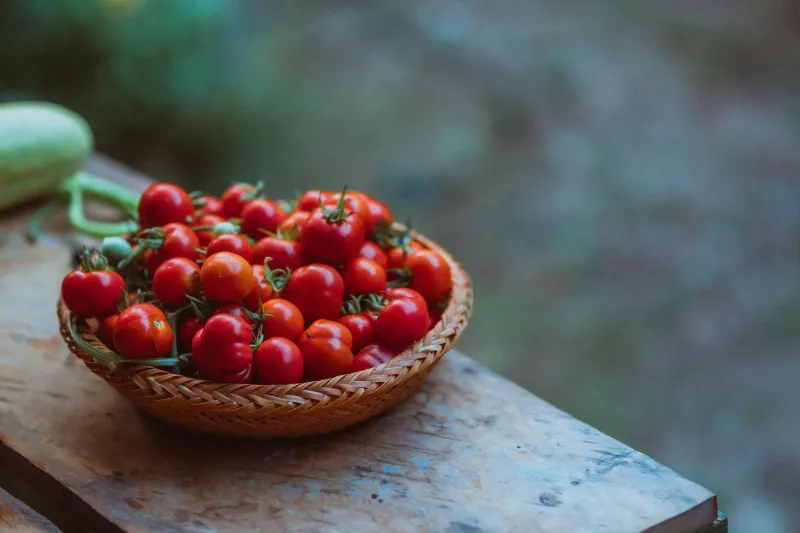
It started when I noticed that Harvest Moon Bistro in downtown Brooklyn was somehow serving "locally sourced" winter tomatoes in February. Unless there's a secret greenhouse operation happening in Prospect Park that I missed, something was fishy—and it wasn't the "line-caught" salmon that definitely came from a truck.
 Photo: Prospect Park, via www.tripsavvy.com
The 47-Mile Miracle
My investigation led me to what insiders call "The Magic Circle"—a 47-mile radius that restaurants have somehow agreed is the maximum distance something can travel while still being considered "local." This isn't based on any law, regulation, or even a strongly worded blog post. It's just a number that someone pulled out of thin air, and now it's gospel.
The genius of the 47-mile rule becomes clear when you realize it perfectly encompasses the Sysco distribution center in Newark, New Jersey. Suddenly, that "locally sourced" arugula at your $28 salad makes perfect sense. It's local to New Jersey, which is local to New York, which is basically local to your mouth.
Meet Derek: Professional Local-izer
I spent a day with Derek Holmberg, a "sourcing coordinator" whose job is essentially to perform geographical gymnastics that would make an Olympic athlete weep. Derek showed me his map of the tri-state area, covered in concentric circles like a bizarre dartboard.
"See, people think 'local' means the farm next door," Derek explained while pointing to a circle that somehow included parts of Pennsylvania. "But that's small thinking. Local is a feeling, you know? It's about community. And technically, we're all part of the greater Northeast megalopolis community."
Derek's proudest achievement? Convincing a restaurant in Manhattan that potatoes from a farm in Connecticut were "hyperlocal" because the farmer once lived in Queens.
The Menu Euphemism Decoder Ring
During my investigation, I compiled a comprehensive guide to restaurant menu language that should be required reading for anyone who's ever paid $16 for three brussels sprouts:
"Foraged" - Someone walked through Whole Foods and picked things up with their hands
"Relationship-based sourcing" - We have the phone number of someone who knows someone who might know a farmer
"Chef-curated" - The chef pointed at things in a catalog
"Artisanally crafted" - Made by a person instead of a robot (probably)
"Farm-to-table" - Traveled from farm to warehouse to distributor to truck to loading dock to kitchen to table (the table part is accurate)
"Sustainably raised" - The animal was sad about climate change
The Sysco Revelation
The breakthrough in my investigation came when I followed a "locally sourced" delivery truck from Harvest Moon Bistro. Instead of winding through pastoral countryside, it led me straight to a massive Sysco warehouse complex in Newark that looked like it could house a small aircraft carrier.
Inside, I watched as cases of "locally sourced" vegetables were loaded onto trucks alongside industrial-sized containers of ranch dressing and frozen mozzarella sticks. The cognitive dissonance was beautiful in its brazenness.
A warehouse worker named Tony, who agreed to speak anonymously, summed it up perfectly: "Local? Brother, some of this stuff has seen more states than a presidential campaign. But hey, it's all local to somewhere, right?"
The Economics of Elastic Geography
Restaurants aren't just stretching the definition of "local" for fun—there's serious money involved. A "locally sourced" menu item can command a 30-40% price premium over its non-local counterpart. That $18 "local" chicken breast suddenly makes economic sense when you realize the restaurant is paying $3 for the chicken and $15 for the word "local."
I interviewed Dr. Patricia Hendricks, a food systems researcher at Columbia, who explained the phenomenon: "Consumers are paying for a narrative, not nutrition. They want to feel connected to their food's origin story, even if that story is essentially a work of fiction."
The Legal Loophole That Ate America
Here's the kicker: "locally sourced" has no legal definition. None. Zero. The FDA regulates "organic," the USDA oversees "grass-fed," but "local" is the Wild West of food labeling. Restaurants can literally claim that food from Mars is locally sourced as long as they're willing to defend their definition of "local solar system."
This legal vacuum has created an entire industry of semantic acrobats who can make a tomato from Chile sound like it was grown in your backyard. It's impressive, really, if you appreciate the art of creative geography.
The Future of Fictional Proximity
As my investigation concluded, I realized that "locally sourced" has evolved beyond mere marketing—it's become a shared cultural delusion that we're all complicit in maintaining. Restaurants need it to justify their prices, customers need it to feel good about their choices, and consultants like Derek need it to pay their rent.
Maybe the real local sourcing was the friends we made along the way. Or maybe it's time to admit that in a globalized food system, "local" is just another word for "expensive."
Either way, I'll be sticking to the food trucks that are honest about their relationship with Sysco. At least they're not pretending that their hot dogs have a terroir.