In Memoriam: The Amuse-Bouche, Gone Too Soon, Sacrificed on the Altar of 'Approachability'
In Memoriam: The Amuse-Bouche, Gone Too Soon, Sacrificed on the Altar of 'Approachability'
The Food Woke Report extends its deepest condolences to the families of white tablecloths, amuse-bouches, and anyone who ever genuinely enjoyed a three-hour tasting menu.
It is with a heavy heart, a half-empty coupe of Champagne, and a single cold gougère that The Food Woke Report announces the passing of the amuse-bouche. Born sometime around 1970 in the gilded dining rooms of nouvelle cuisine France, and naturalized into American fine dining shortly thereafter, the amuse-bouche — literally, "amuse the mouth" — died quietly last spring when Chef Damien Rousseau of the formerly four-star Atelier Rousseau announced that his restaurant would be "pivoting to an elevated casual concept" and replacing the tasting menu with something he described, without apparent shame, as "a really thoughtful burger program."
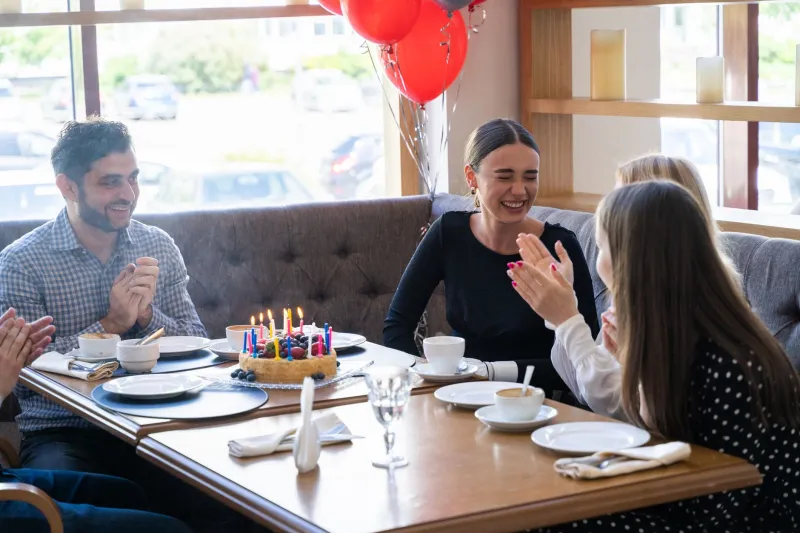
 Photo: Atelier Rousseau, via storage.e.jimdo.com
The amuse-bouche was 54 years old. It is survived by a $28 wagyu smash burger, three pendant Edison bulbs, and a chalkboard menu written in a font that cost more to license than your monthly rent.
Early Life and Years of Quiet Excellence
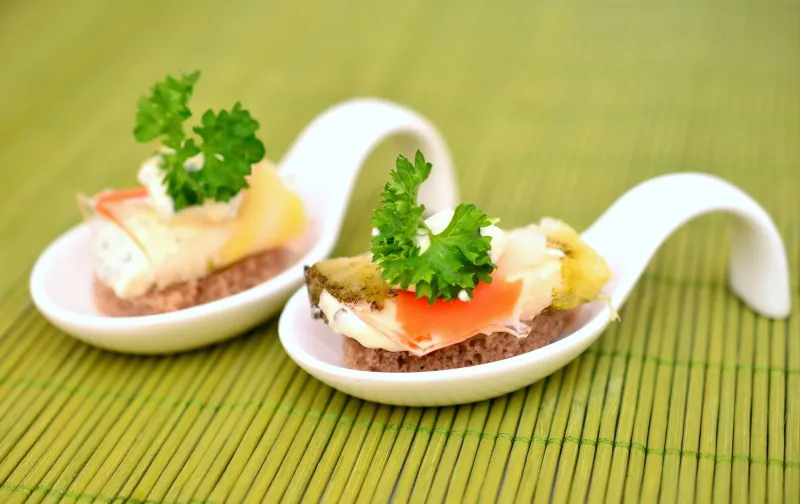
The amuse-bouche was, at its core, a gesture. One perfect bite — a dime-sized cup of chilled cucumber soup, a single gnocco the size of a marble floating in truffle foam, a fried quail egg balanced on a silver spoon — delivered by a server who introduced it with the gravity of a UN ambassador presenting a peace treaty. It cost you nothing extra. It asked nothing of you except the willingness to sit still, suspend your need for portion sizes that register on a scale, and briefly trust that someone in a kitchen had a vision.
For decades, this was enough. More than enough, actually. The amuse-bouche was the handshake that told you the next three hours were going to be serious, intentional, and probably worth the babysitter fee.
And then the pandemic happened.
The Illness: A Brief but Brutal Decline
The fine dining industry, battered by two years of forced closure, reduced capacity, and a dining public that had spent eighteen months perfecting its own sourdough, emerged from COVID-19 with a crisis of identity so profound it made a philosophy major's sophomore year look grounded and purposeful.
Somewhere between the ghost kitchens, the QR menus, and the collective national trauma, a consensus formed among restaurateurs that "fine dining" had become a liability. Too stuffy. Too expensive. Too much. The solution, apparently, was to take the same square footage, the same trained kitchen staff, and the same real estate costs, and simply remove anything that felt like effort.
The white tablecloths went first. Replaced by bare wood tables — reclaimed, naturally, from a barn in Vermont that may or may not have existed. The sommelier was rebranded as a "beverage director" and given permission to recommend canned wine without visible distress. The prix fixe tasting menu, once the beating heart of serious American cuisine, was quietly retired and replaced with a menu of "shareable plates" that required the social negotiation skills of a UN peacekeeping mission to order.
And the amuse-bouche? The amuse-bouche was deemed, in the language of post-pandemic restaurant consulting, "a friction point."
Death by Consulting Report
Sources close to several formerly prestigious dining rooms — who spoke on condition of anonymity because they still have mortgages — confirm that the amuse-bouche's execution was authorized by a hospitality consulting firm that charged $40,000 to produce a 60-page report recommending that restaurants "lower the barrier to entry" and "meet diners where they are."
Where diners apparently are: at a barn-wood table, eating a very expensive burger, having been told by a server named Kayleigh that tonight's special is "a really fun play on a classic."
The report did not address where diners wanted to be. That data was not collected.
What We've Lost
Let us be honest about what the amuse-bouche represented, because the industry certainly isn't going to eulogize it properly. That single unrequested bite was, in fact, a declaration of intent. It told you the chef had opinions. That the kitchen had standards that exceeded what you'd ordered. That the meal was going to be a conversation, not a transaction.
There is something genuinely moving about a restaurant that gives you something beautiful before you've earned it — before you've ordered, before you've paid, before you've proven yourself a worthy audience. It was generosity disguised as pretension, and we mistook the costume for the character.
Now we have $28 smash burgers and a curated selection of "heritage grain" cocktail snacks that arrive in a paper cone for $16 and contain exactly seven pieces. This is called "approachability." It is, in fact, just a higher margin.
Memorial Service Details
A celebration of life will be held at whatever Atelier Rousseau is calling itself now — we believe it's "Atelier" with the Rousseau quietly dropped and a neon sign that says "Good Food Good Vibes" installed where the Michelin plaque used to hang.
In lieu of flowers, the family requests that you sit quietly in a restaurant that still uses tablecloths, let the server bring you whatever small thing the kitchen wants to share, and resist — just for one evening — the urge to photograph it before it gets cold.
The amuse-bouche would have wanted that. It always did.