Feeding the Beast: A Grief Counselor's Guide to the Living Flour Creature You Love More Than Your Spouse
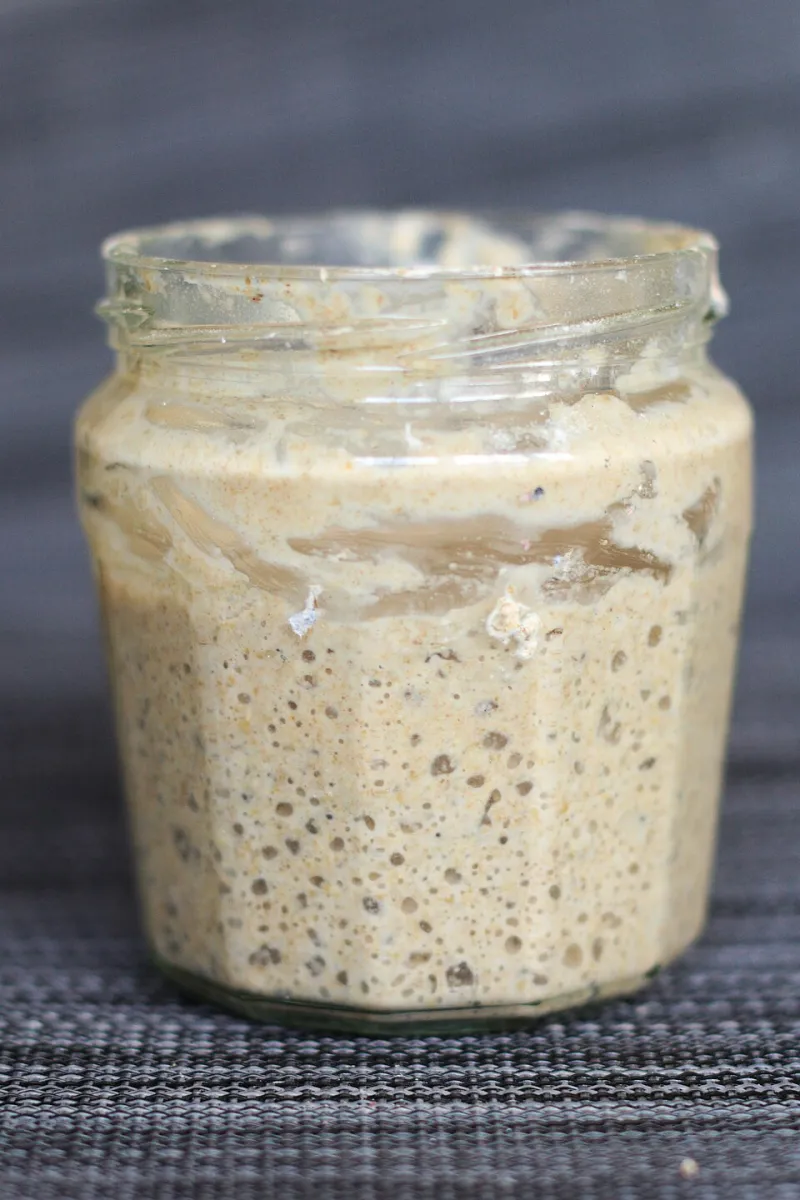
Photo: Jeuwre, CC BY-SA 4.0, via Wikimedia Commons
Let the record show that in the spring of 2020, while the world was collapsing at a historically unprecedented rate, millions of Americans looked inward, assessed their priorities, and decided the most urgent thing they could do was keep a jar of wet flour alive on their kitchen counter.
Not call their parents. Not reconnect with estranged friends. Not finally have the conversation with their partner about the dishes. No. They fed the starter.
And they named it.
The Naming Ceremony
This is where it begins, actually. Not with the baking, not with the Instagram post of the perfect ear on a batard loaf — it begins with the naming. Because the moment you assign a name to a microbial culture living in a Mason jar, you have entered into a relationship with legal-adjacent emotional obligations.
They called them Doughstoyevsky. Yeastus Christ. Carb Diem. Gluten Tag. Names that signal not just whimsy but a level of emotional investment that should have triggered a wellness check from someone who loves you.
Because here's the thing about naming something: your brain — your beautiful, exhausted, pandemic-addled brain — immediately begins treating it as a dependent. You start worrying about it. You set alarms. You cancel plans. You come home early from things that barely qualified as going out anyway because you forgot to feed Gerald, and Gerald cannot be left unfed.
Gerald is a jar of flour and water with ambient yeast in it.
Gerald does not have feelings.
And yet.
The Maintenance Rituals
For the uninitiated, maintaining a sourdough starter is, objectively speaking, not that complicated. You discard some, add flour and water, repeat. That's it. That is the entire thing.
But the sourdough community — and there is a community, with subreddits and Facebook groups and a level of passionate disagreement that would embarrass most city councils — will tell you that it is a practice. A discipline. Something approaching sacred.
The hydration ratios are debated with the intensity of constitutional scholars. The flour type becomes a moral position. Feeding schedules are discussed with the solemnity of a pharmacological regimen. Someone, somewhere, is currently explaining to their significant other why the starter needs to be fed at the same time every day because consistency matters in a tone that suggests they have never once applied this logic to date night.
The rituals compound. You begin keeping it at room temperature, then researching the optimal ambient temperature for your specific kitchen, then buying a probe thermometer, then joining a thread about whether your starter is 'sluggish' because of the brand of whole wheat flour you introduced last Tuesday. The starter has now consumed more of your cognitive bandwidth than your 401(k), your blood pressure, and the names of your children's teachers combined.
The Social Media Confessional
Naturally, none of this happens in private.
The performative care rituals of sourdough maintenance found their natural habitat on Instagram and TikTok, where the genre quickly evolved from 'look at my bread' to something closer to lifestyle documentation of an ongoing spiritual journey. The aesthetic was established early: wooden cutting boards, linen dish towels in muted earth tones, natural light that suggested a farmhouse in Vermont even if the actual setting was a studio apartment in Glendale.
The captions began doing real psychological work. Fed my starter at 3am. Worth it. Gerald is thriving and honestly I'm jealous. I haven't called my mother in six weeks but Beatrice gets fresh rye every 48 hours without fail.
The last one wasn't a joke. People were posting these things unironically, and other people were responding with heart emojis and 'goals,' which tells you everything you need to know about where we were collectively as a nation.
The confessional energy was real. There was genuine guilt in those posts — the slightly sheepish admission that the jar had become a priority, that the feeding schedule had been honored when other obligations had not. And the community responded not with concern but with recognition. You get it. We all get it. The starter comes first.
The Death and the Grief
And then someone let theirs die.
If you want to understand the depth of the emotional attachment that formed during this period, look no further than the obituaries. Because people wrote obituaries. Full eulogies, posted publicly, for deceased sourdough starters. Complete with what went wrong (a missed feeding, a refrigerator malfunction, a house-sitter who was given instructions and failed to follow them — the house-sitter never fully recovered socially from this).
The grief was not performative. Or rather, it was performative in the way that all public grief is performative, but the underlying emotion appeared to be entirely genuine. People were sad. Legitimately sad. Sadder, several admitted, than they had been about some actual human losses in their lives, which is either a commentary on the starter or a commentary on those relationships, and either way is a lot to unpack.
Therapists began reporting an uptick in starter-related sessions around 2021. This is not a joke. This is a real thing that happened in America.
The Inheritance Problem
Here is where it gets philosophically complicated: the starters that survived became heirlooms.
People began passing portions of their starters to friends and family members with the gravity of estate planning. This is a piece of mine. It's been going since April 2020. Take care of it. Recipients accepted these transfers with the solemnity of someone receiving a family Bible. The lineage mattered. The provenance mattered. This starter has been alive longer than some of your friendships, and that sentence is meant to confer value onto the starter rather than concern onto the friendships.
Some starters have now been in continuous operation for five years. Five years of twice-weekly feedings, careful temperature management, and documented growth patterns. Five years of more consistent, attentive, disciplined care than most houseplants, most gym memberships, and — let's be honest — most romantic relationships receive.
The starter outlasted the sourdough phase for many of its keepers. It outlasted the pandemic hobby energy, the King Arthur flour shortage, the moment when everyone's loaves started looking genuinely good and they lost interest. The starter persisted, demanding its feeding, indifferent to its keeper's enthusiasm level, unmoved by the fact that nobody in the house has made bread in fourteen months.
The Lesson Nobody Asked For
What does it mean that we poured this much care into fermented flour while the actual people in our lives got the discard?
Probably nothing. Probably it was just a coping mechanism during an impossible time, a small controllable thing in an uncontrollable world, a daily ritual that produced tangible results when everything else felt abstract and hopeless. That's the generous read, and it's almost certainly the correct one.
But also: Gerald is still on your counter. Gerald needs to be fed. Gerald has outlasted two friendships, one gym membership, and the brief period when you were genuinely committed to calling your dad every Sunday.
Gerald is thriving.
Gerald would like some rye flour, please.
Gerald cannot love you back.
Gerald does not care.